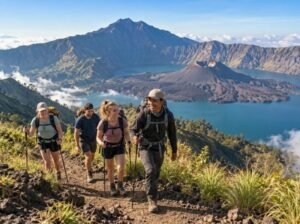
There’s something strange about Rinjani Crater Lake the first time you see it. Not dramatic in a loud way. More like… silent enough to make you stop thinking for a second. The wind feels colder there, thinner somehow, and the water looks unreal, almost painted. If you ever plan a Lombok adventure trip, honestly, this place changes the whole meaning of “mountain scenery.”
People usually come to Lombok for beaches first. Fair enough. The beaches are beautiful. But then someone mentions Mount Rinjani, and suddenly the conversation shifts. Hikers lean closer. Travelers start sharing stories. And somewhere in the middle of those stories, Rinjani Crater Lake always appears like the main character no one forgets.
Why Rinjani Crater Lake Feels Different
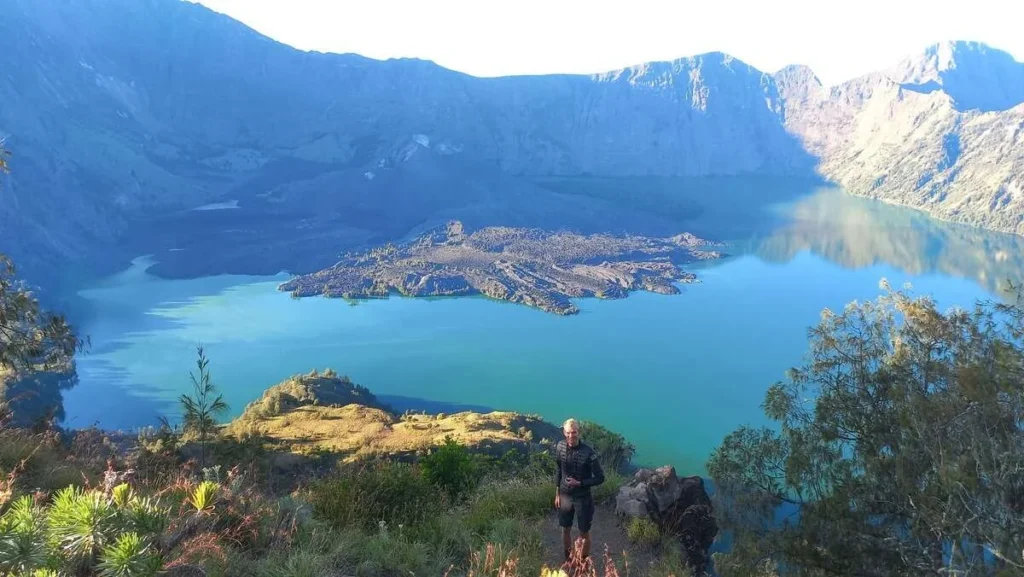
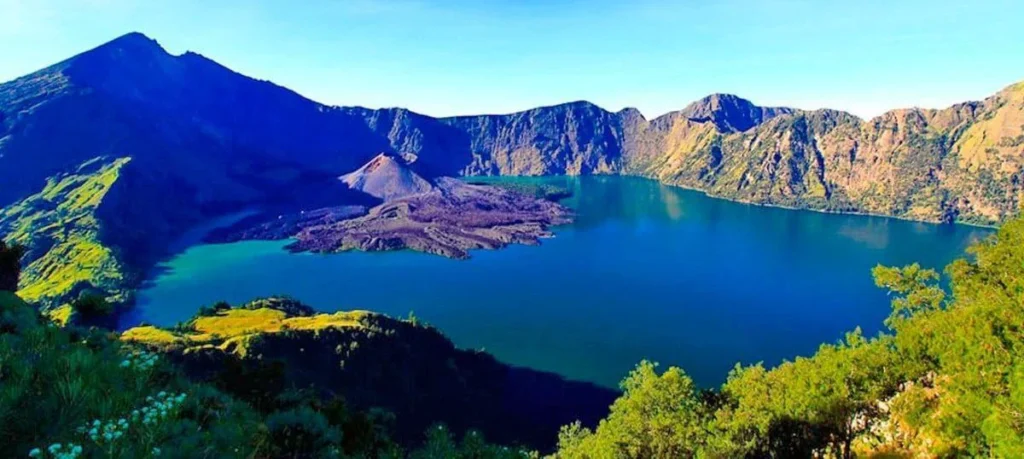
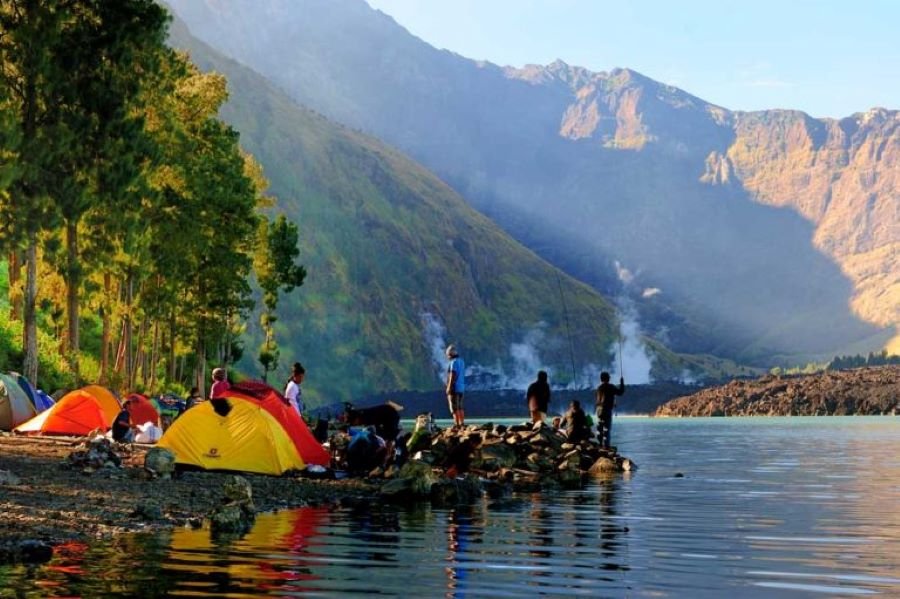
The lake sits inside the massive caldera of Mount Rinjani, Indonesia’s second-highest volcano. Locally, the lake is known as Segara Anak, which roughly means “child of the sea.” Makes sense when you see the color. Deep blue. Sometimes green. Depending on the weather, or maybe your mood.
Getting there is not easy though.
And maybe that’s the point.
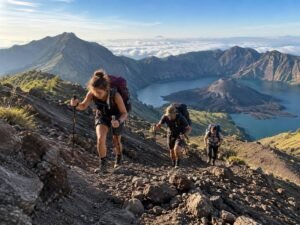
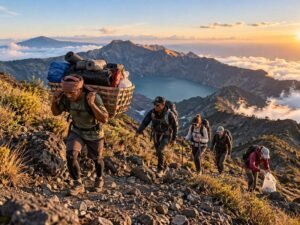
The journey forces you to slow down. You climb dusty trails, walk through forests that smell damp and earthy, and hear nothing except boots scraping volcanic soil. During a proper Mount Rinjani trekking route, your body gets tired before your mind does. Then suddenly both surrender together.
That’s when the mountain starts feeling real.
The Trek Is Hard. Very Hard Sometimes.
Some blogs make it sound romantic every second. It’s not.
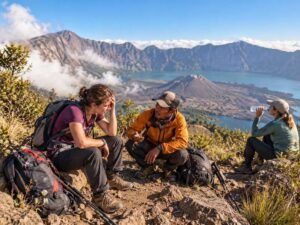
At certain points, your legs burn. The loose gravel slides under your shoes. You breathe heavier than usual. One minute you feel unstoppable, the next minute you question every life decision that brought you there.
But oddly enough, that struggle becomes part of the memory.
I remember someone saying the mountain “tests your ego.” Bit dramatic maybe. Still, after climbing for hours under shifting fog and cold wind, you kind of understand what they meant.
The first glimpse of Rinjani Crater Lake usually comes after a difficult stretch near the crater rim. People go quiet there. Even chatty hikers stop talking. Cameras come out slowly. Nobody rushes.
Because the view is absurdly beautiful.
The Colors Change Constantly
Morning looks different from afternoon.
At sunrise, Rinjani Crater Lake can appear silver-blue under soft clouds. By noon, the water reflects sunlight sharply, almost glowing. And near sunset? Everything becomes warmer, darker, more cinematic somehow.
Interesting thing is, photos rarely capture the atmosphere correctly.
You notice small details instead. Steam rising from nearby hot springs. Tiny ripples moving across the lake surface. The smell of sulfur drifting faintly through cold air. It feels alive. Ancient too.
Maybe that’s why many local people consider the area spiritually important.
Sacred Stories Around the Lake
The Sasak people and Balinese Hindus both see the mountain as sacred. Ceremonies are sometimes held near the lake, especially during certain religious events. Offerings appear quietly along the shoreline — flowers, incense, small woven baskets.
Not for tourists.
That matters.
There’s a respectful silence around those moments. Even travelers who know nothing about local traditions tend to lower their voices naturally near Rinjani Crater Lake. Hard to explain why. The place simply carries that kind of energy.
Camping Beside Rinjani Crater Lake
Cold nights. Very cold.
Still worth it.
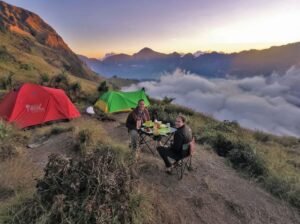
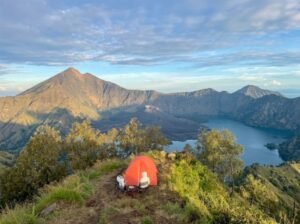
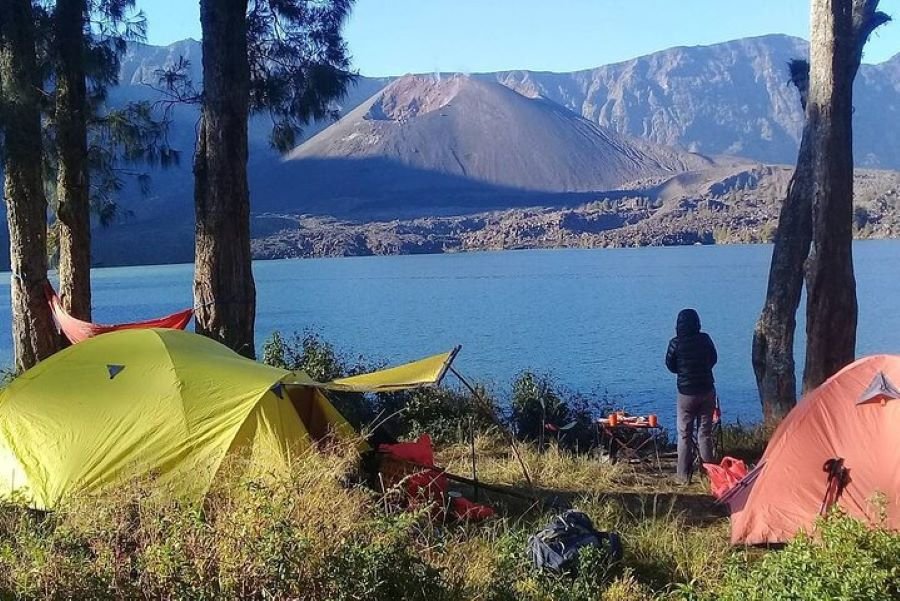
Camping near Rinjani Crater Lake feels different from regular camping trips because the surroundings never fully go dark. The volcano nearby, Mount Barujari, sometimes releases smoke into the night sky. Stars appear unbelievably clear when clouds disappear.
Then there’s the sound.
Not silence exactly. More like layers of natural noise — wind, distant water movement, occasional hikers laughing softly from nearby tents.
Simple things become memorable there. Hot instant noodles. Sweet tea from a metal cup. Wet socks drying badly beside your tent. Strange what sticks in your memory later.
Hot Springs Near the Lake
One of the best surprises during the trek is finding natural hot springs close to the lake area. After hiking for hours, soaking in warm mineral water feels almost unreal.
Your muscles stop complaining for a while.
Some travelers stay there longer than planned, just sitting quietly while steam rises into cool mountain air. Honestly, nobody looks elegant after trekking all day, but nobody cares either.
That freedom feels refreshing.
Best Time to Visit Rinjani Crater Lake
Dry season works best. Usually between April and November.
During rainy months, trails become slippery and visibility can disappear quickly. Not ideal, especially for first-time hikers. A good Lombok travel guide will normally recommend checking weather conditions before booking any trek because Mount Rinjani can close unexpectedly for safety reasons.
And safety matters here.
This is not a casual city walk. People underestimate volcano trekking sometimes, especially after watching polished travel videos online. Real conditions can change fast.
Bring proper shoes. Layers. Water. Patience too.
Especially patience.
The Emotional Side of the Trek
Nobody talks enough about this part.
Somewhere during the climb, your brain gets quieter. Daily stress fades oddly fast when your entire focus becomes breathing, walking, resting, repeating. You stop checking notifications. Stop thinking about deadlines. Even time feels blurry.
By the moment you finally sit facing Rinjani Crater Lake, exhausted and sweaty and slightly freezing, something shifts internally. Tiny shift maybe. But noticeable.
You feel smaller.
Not in a bad way.
Just aware that nature does not care about schedules or productivity or whatever usually fills our heads. The mountain existed long before us and will remain long after.
Sounds philosophical, I know. But mountains do that to people.
Local Guides Make a Huge Difference
Honestly, good guides can completely change the experience.
Many trekking teams from Lombok know the mountain incredibly well. They share stories, help with pacing, prepare meals, and somehow keep encouraging exhausted hikers without sounding fake. Some even grew up near the mountain itself.
That local connection adds depth to the journey.
A professional Mount Rinjani trekking company also helps reduce environmental impact by organizing waste management and safer camping practices. Which is important because tourism pressure has increased heavily in recent years.
Sadly, some visitors still leave trash behind.
And that part hurts to see.
Protecting the Mountain
The beauty of Rinjani Crater Lake depends on people respecting it. Simple things matter more than travelers realize. Carry your trash back down. Avoid damaging plants. Stay on designated paths.
Not complicated.
Just basic respect.
Sometimes preserving a place starts with small decisions nobody applauds.
Food Somehow Tastes Better Up There
Maybe it’s the altitude.
Maybe exhaustion.
But even simple meals during the trek feel incredible. Fried rice cooked near the crater rim. Hot coffee before sunrise. Bananas eaten while sitting on volcanic rock. Tiny moments become strangely vivid when you’re physically tired and emotionally overwhelmed by the scenery.
I still remember the smell of instant soup mixing with cold mountain air one evening beside Rinjani Crater Lake. Random memory. Yet weirdly strong.
Travel works like that sometimes.
Is the Trek Worth It?
Short answer? Yes.
Long answer… yes, but only if you’re ready for discomfort too.
The mountain gives beauty, but it asks for effort first. That balance makes the experience feel earned. Unlike destinations where you simply park nearby and take photos immediately, Rinjani Crater Lake requires time, energy, and patience.
And honestly, that effort changes how you remember it later.
A lot of travelers arrive expecting scenery. They leave talking about emotions instead. About silence. Fatigue. Gratitude. Perspective.
Kind of unexpected for a hiking trip.
Final Thoughts on Rinjani Crater Lake
There are many beautiful places in Indonesia. Beaches, waterfalls, islands, volcanoes. But Rinjani Crater Lake stays with people differently. Maybe because reaching it feels personal. Maybe because the mountain strips away distractions. Or maybe it’s simply the contrast — harsh volcanic terrain surrounding calm blue water.
Either way, the memory lingers.
If you’re planning a Lombok adventure trip, don’t stop at the coastline alone. Explore deeper into the island. Read a trusted Lombok travel guide, prepare properly, and allow yourself enough time to experience the mountain slowly rather than rushing through it.
Because sometimes the best travel moments are not the easiest ones.
Sometimes they begin with sore legs, cold wind, and a long trail leading toward Rinjani Crater Lake.