
The strange thing about Tetebatu Village is that almost nobody talks about the part that makes people stay longer.
They talk about the rice fields.
Those are beautiful, of course.
They talk about Mount Rinjani in the distance. They talk about village walks. They talk about waterfalls. All true. Yet the reason many visitors end up loving this corner of Lombok is harder to describe.
The place simply feels unhurried.
You notice it before you reach the village center. Traffic thins out. The road becomes quieter. Houses sit farther apart. By the time you step out of the car, the day already feels different.
That change of pace is what many people remember long after the photos disappear into their camera roll.
Most people arrive expecting a quick stop
It happens all the time.
Someone adds Tetebatu Village between two bigger attractions. Maybe a waterfall in the morning. Maybe a beach later in the day. The village becomes a small pin on a map.
Then the schedule starts slipping.
Not because anything goes wrong.
People just stay longer than expected.
A short walk turns into an hour. A coffee break becomes a conversation. A viewpoint that looked ordinary on Google suddenly feels worth sitting beside for twenty minutes.
There is no single attraction causing that. The atmosphere does most of the work.
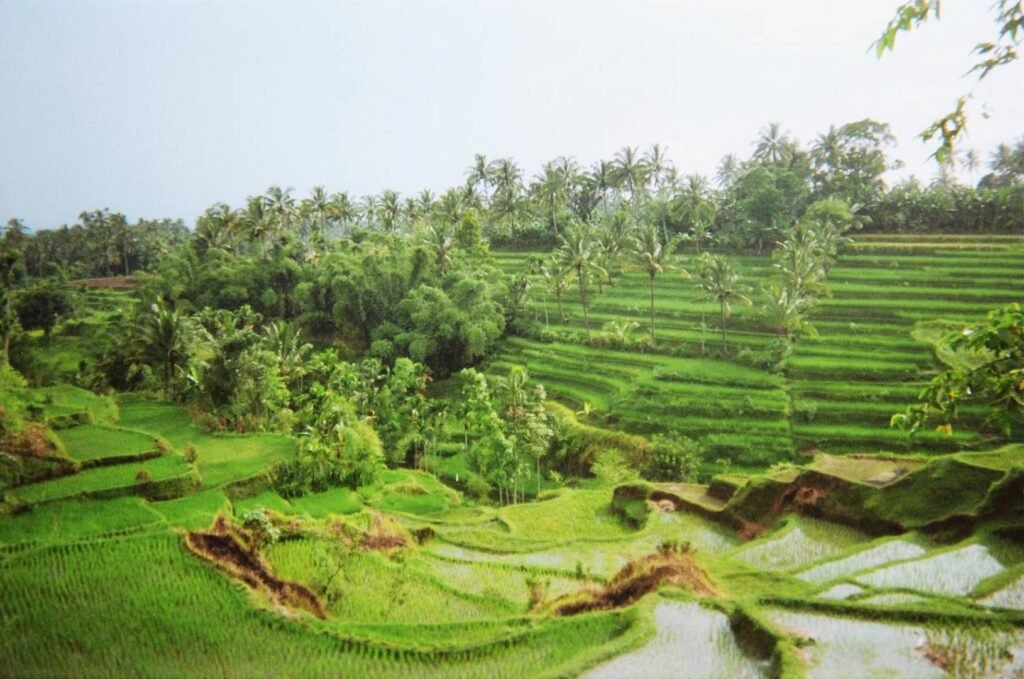
The interesting part is usually between the attractions
If you hire a good Tetebatu Village guide, you quickly realize the tour is not really about ticking off locations.
The guide might stop beside a field and explain why farmers plant at a particular time of year. Five minutes later the conversation shifts toward village life. Then someone notices a line of monkeys moving near the trees and everyone forgets what they were talking about.
That is how days here often unfold.
Not according to a script.
And honestly, that is part of the appeal.
Many destinations feel designed around visitors. Tetebatu still feels designed around the people who live there.
What the landscape actually feels like
Photos usually focus on the terraces.
Standing there feels different.
The fields stretch across rolling ground rather than forming one dramatic viewpoint. Small paths cut between them. Water moves through narrow channels. In some areas you hear birds more often than vehicles.
Nothing about it feels staged.
Even Rinjani plays a surprisingly quiet role. The mountain is present throughout much of the day, yet it rarely dominates the scene. It sits in the background while village life continues in front of it.
That balance gives the area its character.
Big scenery. Ordinary daily life. Neither trying to compete with the other.
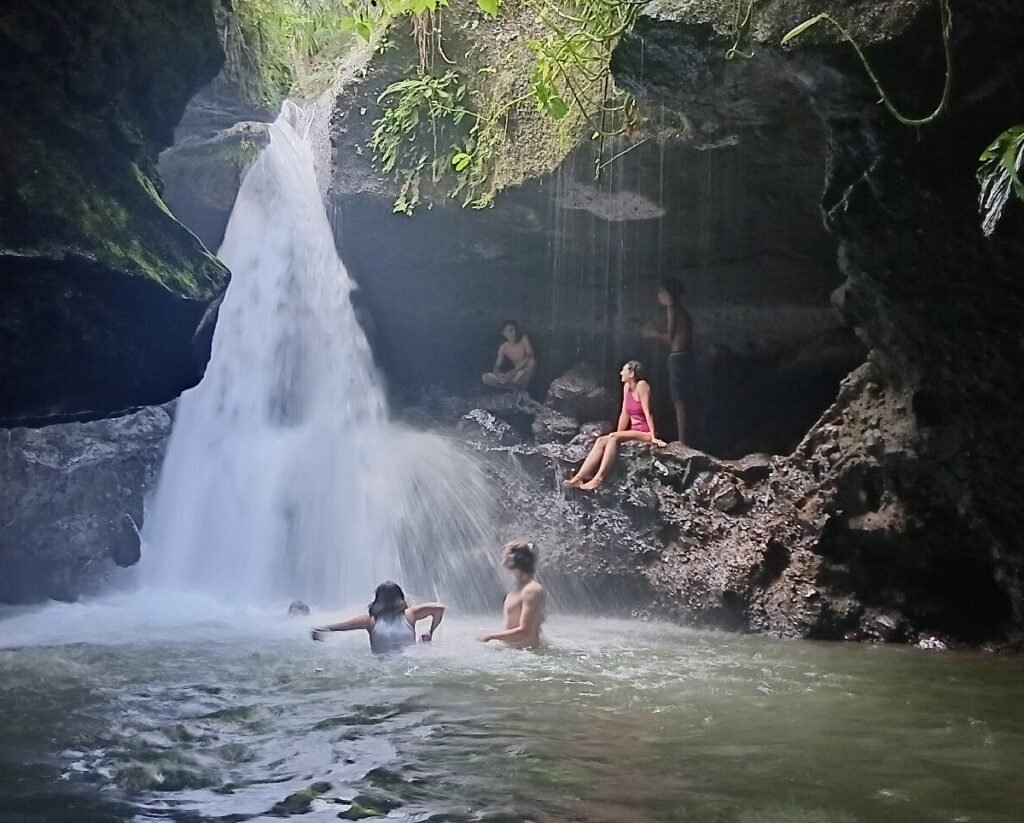
Why waterfall lovers often include Tetebatu
Around midday, many visitors start asking the same question.
What comes next?
This is where Lombok becomes interesting because nature experiences rarely exist in isolation. Travelers exploring Tetebatu Village often continue toward waterfalls or combine multiple stops into a private day trip.
The famous Sendang Gile waterfall remains a popular option for people heading north. The atmosphere there feels completely different from the quiet farmland around Tetebatu.
Others prefer less-visited routes and include Mayung Putek waterfall in their plans. The journey itself becomes part of the reward.
Some travelers connect the countryside experience with a Tiu Kelep waterfall tour. It creates a day that shows several sides of Lombok without feeling repetitive.
No route works for everyone.
That is usually the point.
A few things I often tell visitors
After years of helping travelers explore Lombok, Wayan and the team have noticed something simple.
The people who enjoy Tetebatu most are rarely the ones trying to see everything.
Leave some empty space in the day.
Walk a little slower than usual.
Stop when something catches your attention.
Those suggestions sound obvious. Yet they change the experience more than any itinerary adjustment.
For anyone searching how to visit Tetebatu Village, practical planning still matters. Comfortable footwear helps. Water is worth carrying. Weather conditions can change throughout the year, so flexibility is always useful.
Those are the basics.
The rest is mostly about mindset.
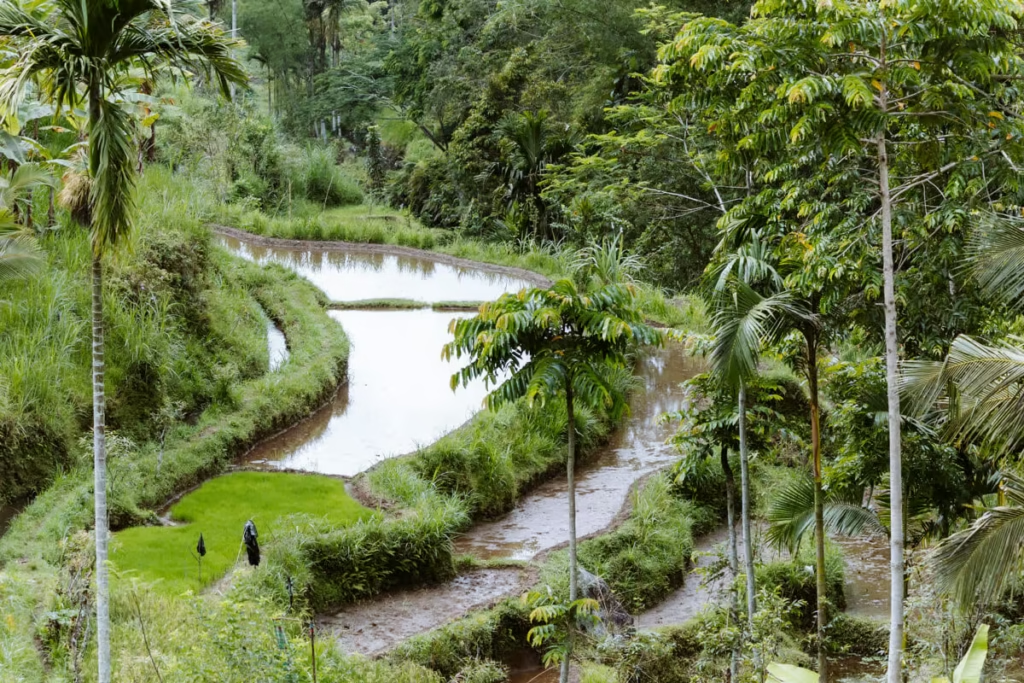
So is Tetebatu Village worth your time?
If your perfect day involves rushing between famous landmarks, probably not.
If you enjoy places that reveal themselves gradually, the answer is different.
Tetebatu Village does not demand attention. It earns it.
That distinction matters.
The village offers scenery. It offers culture. It offers access to nature. Yet none of those things feel forced. They simply exist alongside daily life.
Many Tetebatu Village lombok travel tips focus on where to go and what to see. Fair enough. Those details are useful.
What they often miss is how the place feels.
Quiet roads. Cool air drifting down from higher ground. Farmers working in the distance. A conversation that lasts longer than expected.
That is usually the version of Tetebatu people remember.
Outdoor activities around Lombok depend on weather, route conditions, local regulations, and seasonal factors. Checking current conditions before travel is always recommended.
If Tetebatu Village sounds like your kind of place, message Lombok Adventure Trip through the official website. Wayan and the team can help you build a private itinerary around your interests, available time, preferred activity level, and the side of Lombok you want to experience most.