
Mawi has a small photographic trap. You arrive, see a broad stretch of coast, and assume the scenery will do all the work. So the phone comes out immediately. Sea in the middle. Horizon behind it. Click.
It can look strangely ordinary afterward. A useful Mawi Beach photography guide starts before that first photograph. Give yourself a moment to actually look at the place. See where the shoreline leads your eye. Notice whether adding a person would make the coast feel larger. Often, removing things from the frame works better than squeezing the whole beach into one shot.
And do not arrive expecting somebody else’s photograph. Mawi is a coastal setting. Light shifts, clouds move through, and the sea does its own thing. The picture available to you is the one happening that day.
Look Around Before Deciding What Mawi Should Look Like
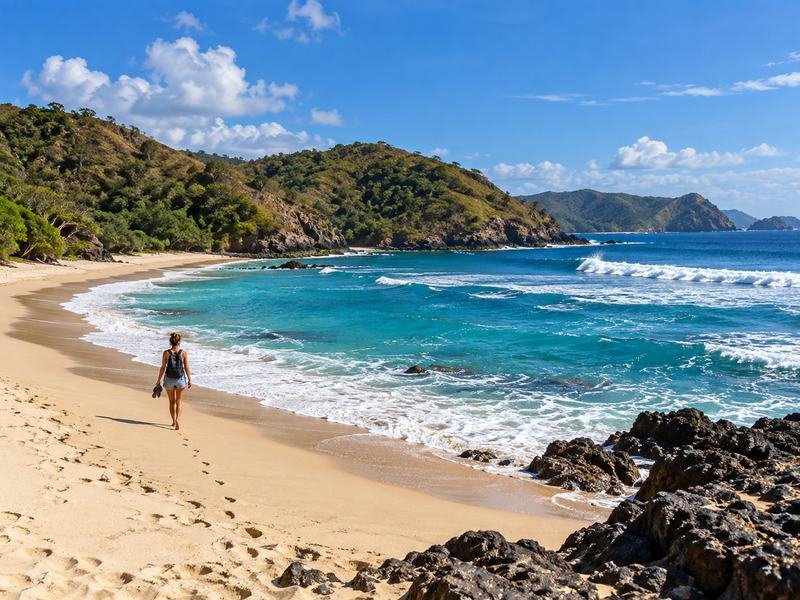
I would spend a few minutes walking before settling on a composition. That small bit of movement can completely change the relationship between the shoreline and what sits farther behind it.
Decide what you are trying to remember, too. Maybe it is the scale of the coast. Perhaps you want a photograph of your partner that still feels connected to the place. Those are different pictures, and treating them differently usually works better than asking one frame to show everything.
For a landscape, search for one visual anchor. A curve in the shore may be enough. Put a person farther into the scene and suddenly the viewer understands the scale. No complicated formula needed.
Use the Light That Turns Up
Travel rarely cooperates with photography schedules. You might reach Mawi under stronger light than you imagined. On another visit, cloud cover could give the beach a completely different mood.
Keep shooting. Under brighter light, watch faces rather than obsessing over camera settings. Moving your subject or changing your own position can make a noticeable difference. If you brought a dedicated camera, use controls you already know.
Mawi may also be one stop in a longer day. In that case, planning the journey matters more than chasing a theoretical perfect minute for a photograph. The lombok adventure guide is worth browsing when you are trying to see how a beach visit could sit within a wider Lombok trip.
Bright Light Does Not Mean Put the Camera Away
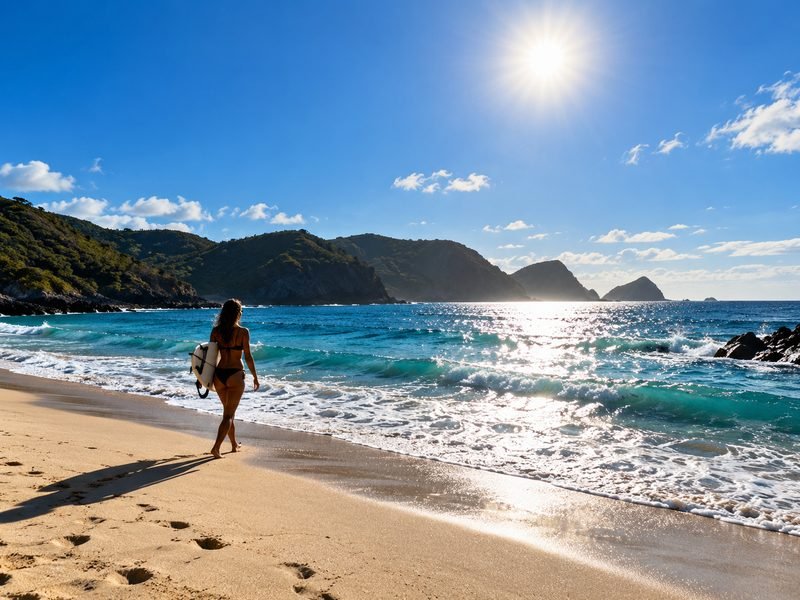
Strong light can make a soft portrait harder. It can also give you something else to work with. Try simplifying the photograph rather than forcing the scene to behave. A clear silhouette might work. A shadow across the sand could become part of the frame rather than something you need to hide.
Move a little. Look again.
One practical habit matters here: check a photograph closely every now and then. A bright beach can make a screen difficult to judge. Finding out later that your favorite sequence missed focus is a disappointing way to learn that lesson.
A Beautiful Coast Still Needs a Subject
Photographing only the obvious view is tempting. There is the sea. There is the horizon. Surely that is enough.
Sometimes it is. But a photograph with nothing close to the camera can lose the sense of depth you felt while standing there. Bring the shoreline into the composition. Let a traveler occupy a smaller part of the scene. If something in the foreground genuinely adds to the picture, try a slightly lower viewpoint.
Just do not turn a creative angle into a balancing act somewhere unstable. Watch the horizon as well. You do not need to stare at an on-screen grid for half the visit, but an accidental slope through the sea tends to become much more obvious once the photograph is viewed on a larger screen.
Couple Photos Usually Improve Once the Posing Stops
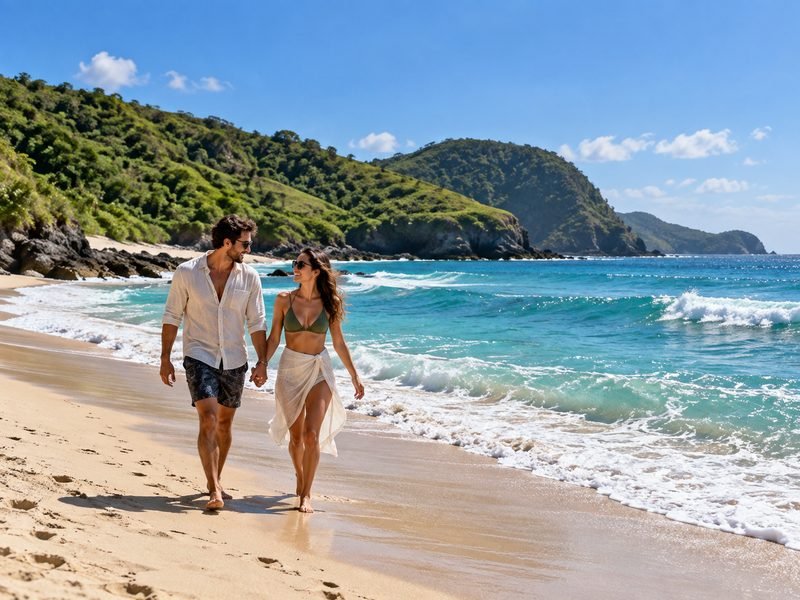
Beach photos with a partner can become repetitive with impressive speed. Stand together. Smile. Move somewhere else and produce almost the same frame.
Break that rhythm. Walk while the other person shoots. Look toward each other instead of automatically finding the lens. With a timer or tripod, compose a little wider so you have somewhere to move rather than trying to hit one exact position in the sand.
You are not trying to manufacture a candid photograph. You are giving a real moment enough room to happen.
For travelers visiting together, the mawi beach couples guide looks at Mawi from the wider perspective of planning the beach visit as a couple, rather than treating it only as a photo stop.
Your Phone May Be All the Camera You Need
Use what you are comfortable carrying. Phones are fast, which is easy to underestimate until something worth photographing happens for only a moment. Pulling out a phone takes seconds. A camera buried inside a bag may stay there.
A dedicated camera has obvious appeal when making photographs is a major reason for the trip. Extra control is valuable when you already understand the equipment. Otherwise, more buttons can simply mean more time looking down while the actual beach is in front of you.
Leave the unnecessary gear behind.
Pay Attention to Sand Before Fancy Camera Settings
I would be more concerned about where I put a camera bag than whether I had brought every lens.
Sand gets into places you would rather it did not. Keep equipment closed when you are finished using it, and think before changing a lens in an exposed spot. If your phone or camera gets splashed, follow the care guidance for that device instead of assuming it can tolerate salt water.
A technically perfect photograph is not much consolation if the trip ends with damaged equipment.
No Photograph Is Worth Turning Your Back on the Sea
This is where concentration can work against you. Looking through a viewfinder narrows your attention, especially when you have finally found a composition you like.
The coast has not stopped moving while you frame it. Stay aware of the water and keep your position sensible. If getting a photograph means standing somewhere that makes you uneasy, change the photograph. Do not negotiate with that instinct.
Treat the beach with the same restraint. A cleaner composition is not a reason to disturb the surroundings. Take your belongings back out with you and let the place remain a beach rather than a temporary photo set.
Mawi does not have to be the only coastal stop either. Travelers still comparing different parts of the island can use the lombok beach page to explore other beach ideas before deciding how much coast they want in the itinerary.
Save a Few Frames for What You Did Not Plan
Not every memorable travel photograph announces itself. It might happen while somebody is getting ready to leave. Your partner could turn around after hearing you call. A photograph made in that half-second may say more about the trip than the frame you spent ten minutes arranging.
Take the wide shot you came for. There is nothing wrong with that. Afterward, stop directing the scene for a while.
This is where travel photographs begin to feel personal. They stop being proof that you visited a beautiful beach and start becoming reminders of what being there actually felt like.
Is a Smartphone Enough for Photos at Mawi?
For many visitors, it is. A phone makes particular sense when photography is part of the day rather than the purpose of it. Get familiar with focus and exposure controls before you travel. Knowing two functions on equipment you already understand is usually more useful than arriving with a complicated camera you barely know.
Is There a Best Time to Photograph Mawi Beach?
There is no single hour that guarantees the photograph you have in mind. Weather and cloud cover influence the light you find when you arrive. Think about the mood you want instead. When timing matters to the rest of your itinerary, discuss current travel conditions rather than building the day around an image you saw online.
Should I Bring a Tripod?
Only if you have a reason to use one. A tripod can make couple photos or self portraits more convenient. It is also another object to carry around the beach. Set it somewhere stable and keep changing water conditions in mind when choosing where it stands.
How Do Couples Get Photos That Feel Less Staged?
Start moving. Walking gives you more natural changes in posture than holding a pose. Let whoever is taking the photograph shoot through that movement rather than waiting for one frozen smile.
You will probably discard a few frames. That is fine. The good ones tend to feel less rehearsed.
Can Mawi Fit Into a Private Lombok Itinerary?
It can be considered when building a custom trip, although the practical route should be discussed before booking. What else you want to do that day matters, and outdoor conditions can affect the plan.
If you want Mawi to be part of a private Lombok adventure, message Lombok Adventure Trip through the official website. Ask Wayan and the team about the itinerary that fits your travel style and pickup arrangements. They can discuss the current practical details with you before the trip rather than pretending every outdoor day unfolds exactly as planned.
That is probably the most useful idea to take from this Mawi Beach photography guide as well. Do not force the coast to match a photograph you have already imagined. Work with what is actually in front of you.
Then keep the camera ready for the moment you did not plan.