We’d happily talk about dinner before discussing your summit photo. After a long climb, that plate of food gets your full attention. If you’re looking into Rinjani camping food and meals, the short answer is that meals are included in our private trekking arrangements, while the actual menu should be discussed before departure.
There isn’t one dinner that suits everybody. You might love spicy food at home and want something much plainer after hours on the trail.
We’d leave room for that.
A hot dinner without the restaurant expectations
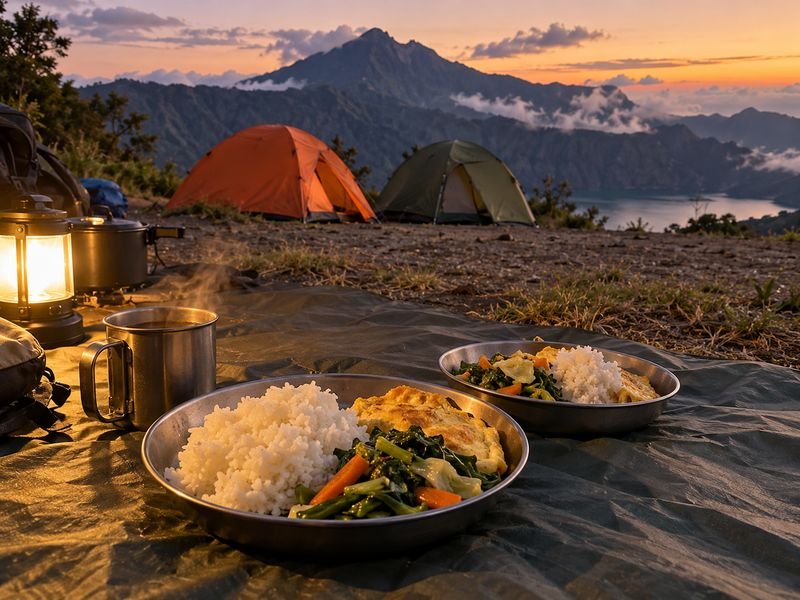
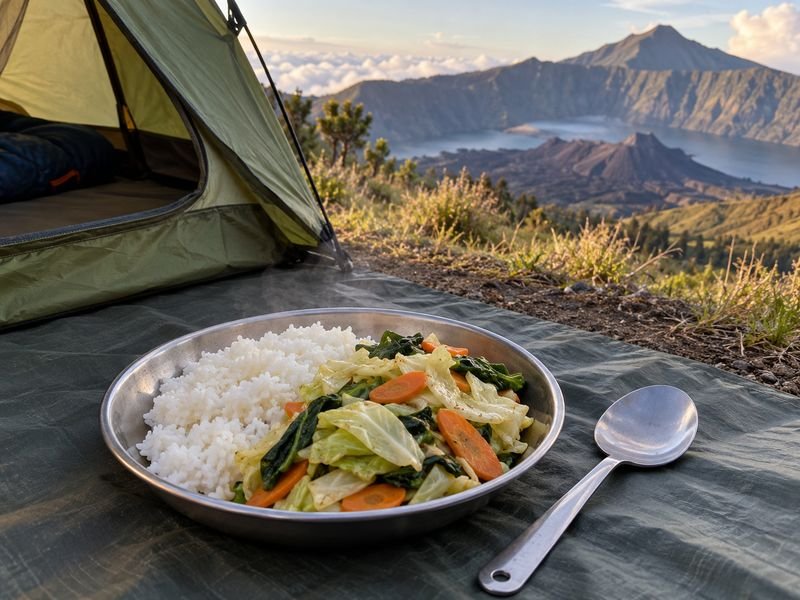
Picture yourself taking off your boots outside the tent. You’re hungry, perhaps a little cold, and probably less interested in a complicated menu than you expected to be back at the hotel.
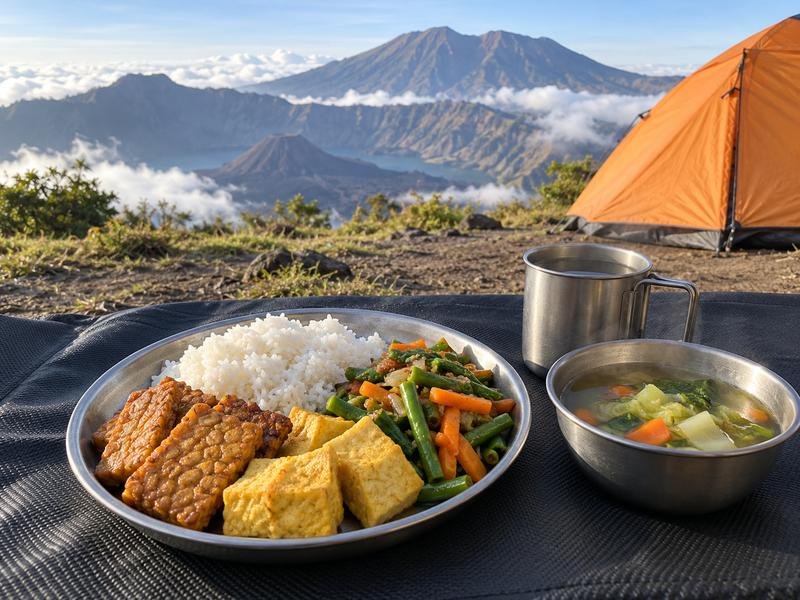
That’s the meal we’d plan around. Rice with cooked vegetables could work well, or you might prefer noodles. Eggs are another possibility if you eat them, although we’d discuss the actual dishes with you before shopping.
Nothing on that list is a promise of a particular menu. We’d rather know what you’ll enjoy eating than send you an attractive food description that doesn’t match the supplies packed for your trip.
Portion size is worth mentioning too. Some people want a substantial dinner; others feel full surprisingly quickly after walking. We’d like to hear which sounds more like you.
We’d keep Rinjani camping food and meals simple and familiar.
What changes with your camping itinerary?
Quite a bit. A night at camp with a relaxed morning afterwards is a different food conversation from a night followed by an early summit attempt.
We’d discuss your plans for Rinjani crater rim camping carefully, because the linked two-day trip includes a summit attempt as well as camping. You shouldn’t have to guess what happens between dinner and breakfast.
Would you be eating something before leaving the tent? Is the larger breakfast planned for after you return? Those are useful questions, especially if eating immediately after waking doesn’t usually agree with you.
We wouldn’t push a big breakfast simply because there’s a long walk ahead. We’d talk through what you can comfortably manage and what the crew can prepare.
How we would plan Rinjani camping food and meals
We’d start with what you normally eat. Simple enough. If rice is familiar and you enjoy it, there’s little reason to build your mountain menu around unfamiliar trekking food.
Then we’d look at the gaps between meals. We’d discuss Rinjani camping distance and duration alongside food arrangements, since a longer walking day can leave you wanting something well before dinner is ready.
We’d also distinguish meals from personal extras. Having food included doesn’t tell you whether your favourite snack or a particular drink is supplied, and we’d clear that up before you pack.
A written meal outline helps here. We don’t mean a restaurant menu with photographs; we’d simply want both sides to understand which meals are covered and where your own snacks fit.
There’s a person carrying those ingredients
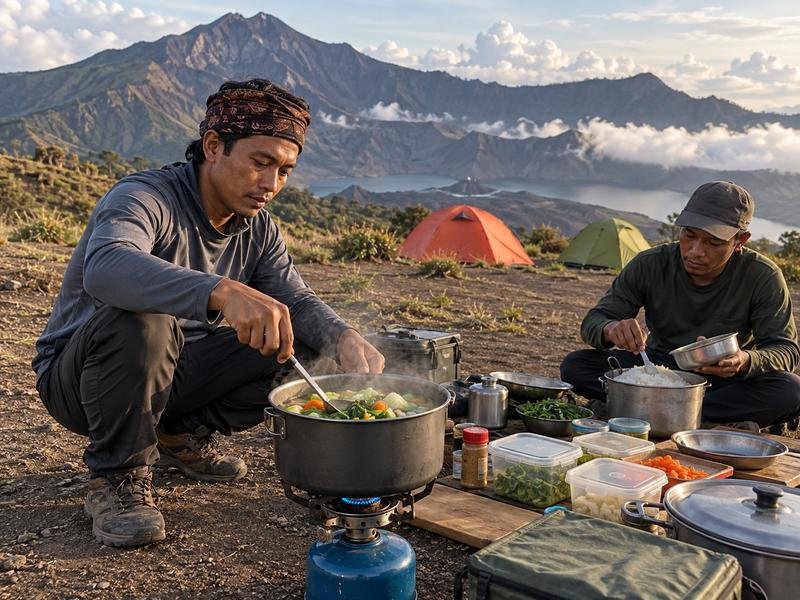
It’s easy to forget this while packing at your hotel. The food doesn’t arrive at camp in a delivery van. Someone carries it uphill, along with the equipment used to cook it.
So we’d think twice about adding heavy personal food that you aren’t likely to eat. A little comfort food? Fair enough. Several bulky containers for a short trip would be a conversation before departure.
We’d make the same practical decisions when planning your wider trip around Rinjani mountain Lombok. The route affects what the crew carries, and fair porter loads should stay part of that discussion.
Dinner also takes time to prepare. We’d give the team space to cook after reaching camp, especially when rain has made unpacking and setting up more difficult.
A familiar snack can be a very good idea
We wouldn’t buy a whole bag of expensive energy bars without trying one first. You might dislike them. Finding that out halfway through a climb is an unnecessarily disappointing snack break.
Your favourite snack has a place alongside Rinjani camping food and meals.
Something familiar makes more sense to us. Crackers could suit you, while another person might choose dried fruit. We’d favour a small amount that travels well and doesn’t leak inside your daypack.
Access counts. We’d keep the food intended for walking breaks with you, because a snack packed deep inside another bag may be somewhere else when you want it.
Dietary requests are easier before shopping
“Vegetarian” is a useful beginning, but we’d keep talking. Do you eat eggs? Would you avoid a sauce containing fish? We’d like to understand your version of the request before anyone buys ingredients.
Let’s plan Rinjani camping food and meals around what you can eat.
The same goes for vegan meals. We’d discuss possible dishes and cooking ingredients with the team, then confirm what can actually be arranged for your departure.
Allergies deserve a more detailed conversation. We’d want to understand the trigger and whether shared equipment presents a problem, because a small camp kitchen may have limits that affect your decision.
We won’t guess. If the available preparation arrangements can’t meet your requirements, we’d explain that before you commit to the trek.
Water shouldn’t be an afterthought
We’d want a clear answer about drinking water before setting off. Meals being included doesn’t explain how water will be supplied or how refills will work on your chosen route.
The unglamorous details count here. We’d discuss those arrangements with the crew, just as we’d expect clean utensils and covered food while dinner is being prepared.
And we’d take wrappers back out with us. Food scraps shouldn’t be left beside tents or thrown into water, even when they look harmless. We’d keep wildlife out of the dinner plans too.
Will the portions be enough for me?
Let’s discuss your appetite beforehand. If you tend to eat a lot after exercise, we’d want that included in the planning, with quantities confirmed for your particular trip.
Can I bring food from home?
Yes, a modest amount can be useful. We’d discuss anything needing refrigeration or separate cooking beforehand, so you don’t arrive with food the crew can’t reasonably store or prepare.
Can you arrange vegetarian meals?
Possibly, yes. We’d confirm suitable dishes and ingredients with you before departure, rather than assume removing meat from a meal answers every dietary concern.
What if I lose my appetite?
We’d want you to tell the guide, especially if you also feel unwell. A smaller meal might be easier to face, but we wouldn’t assume hunger is the only issue.
You’re welcome to send us your questions about Rinjani camping food and meals through the official Lombok Adventure Trip website. Tell Wayan and the team what you enjoy eating and anything you must avoid. From there, we can discuss a suitable itinerary and trekking difficulty, then work through pickup arrangements and permits while considering current weather information.