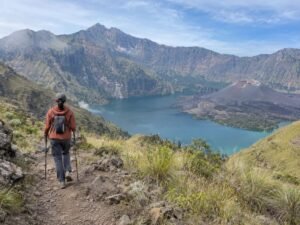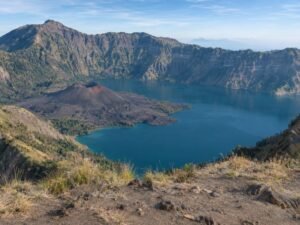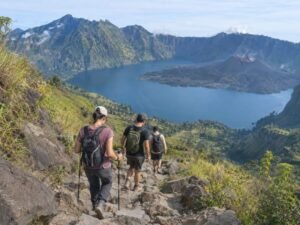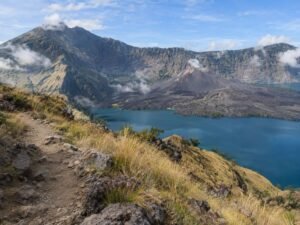
The spare T shirt is probably fine. It’s the thick sweatshirt, still damp from the climb, that we’d worry about at bedtime. That’s where we’d begin with “Rinjani camping what to bring”. A smaller bag isn’t much of an achievement if you’ve left out the clothes that would let you sleep comfortably.
Our priorities are fairly ordinary. Footwear you’ve walked in before. Warm layers, protected from rain. A working headlamp. Water within reach, with the amount agreed for your route. The tent and sleeping equipment come into a separate conversation with the team before you start buying things.
Your beach luggage can sit this one out.
What sort of camping trip have you booked?
A night in a tent tells us surprisingly little about the walking. You might be heading to a crater rim and returning the following day. You might also be planning to leave camp in darkness for a summit attempt. We’d pack with that difference in mind. Your route shapes the answer to Rinjani camping what to bring.
The page linked here for Rinjani crater rim camping describes a two day summit program, so we’d talk through the walking before treating it as a simple overnight escape. The word camping can make a demanding trip sound rather gentle.
Time to be honest. If you’re picturing an afternoon stroll followed by dinner outside a tent, tell Wayan that before booking, because the route you have in mind may differ from the program you’ve found.
Our take on Rinjani camping what to bring
I’d start packing at bedtime, then work backwards. What will you change into after walking? How will those clothes stay dry? It’s less exciting than choosing a camera lens, but probably more useful once you’ve stopped moving.
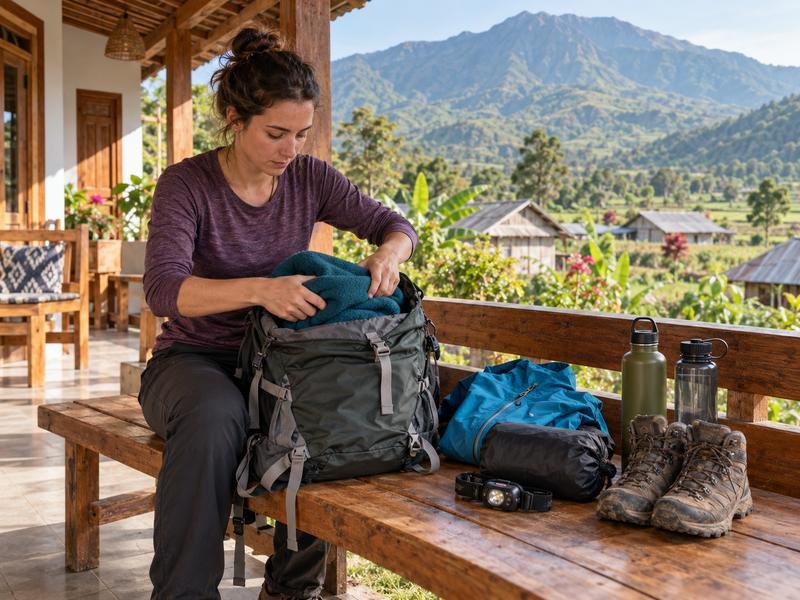
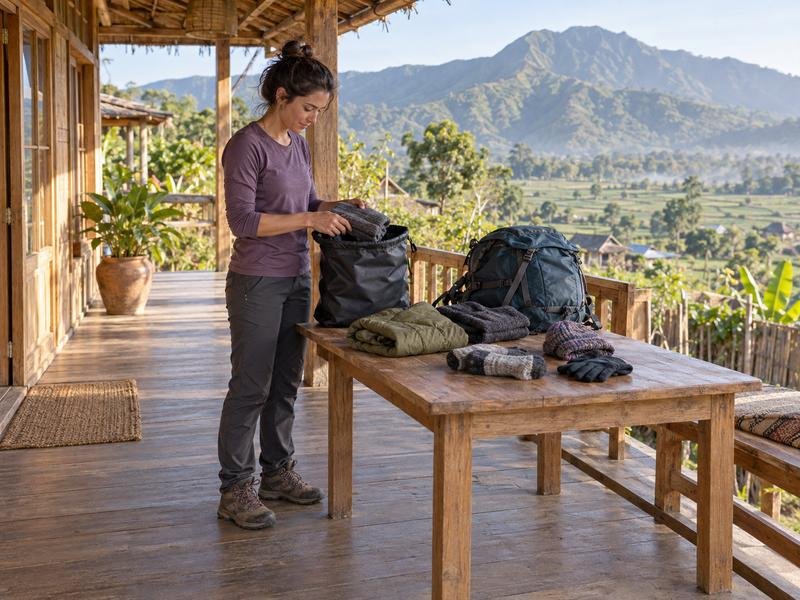
We’d set aside dry sleeping clothes and spare socks inside a waterproof inner bag. A cover stretched over the outside of the backpack wouldn’t be our only defence against rain, especially with the clothes we’re counting on for the night. Dry sleeping clothes would top our Rinjani camping what to bring notes.
Keep that bundle separate. Otherwise, it’s easy to pull out a dry top during the climb and discover later that your evening layer has become another sweaty walking shirt.
For warmth, the conversation starts with your jacket and what fits underneath it. Some people feel cold long before their companions do. There’s no reason to pretend otherwise when we discuss your equipment.
A warm hat is a small addition we’d keep. Gloves deserve space too, particularly for a summit plan. The final combination depends on the route and expected conditions; a bright departure morning doesn’t settle what the night will feel like.
The boots don’t have to be new
Actually, we’d prefer them not to be. Shoes that you’ve already used on a long hilly walk give you something to judge, while a fresh pair mostly gives you hope. We’d put familiar shoes on any Rinjani camping what to bring list.
Downhill is the useful test. Your toes shouldn’t be repeatedly hitting the front, and we’d want to know about heel rubbing before you commit to hours of walking in the same footwear on Rinjani.
The socks are part of this. Trying boots with thin everyday socks, then travelling with thick hiking socks, can change the fit more than you’d expect.
Light camp footwear can feel lovely after taking your boots off. Whether we’d carry it depends on the weight and how suitable it is for the ground around camp. Barely attached beach sandals wouldn’t be our first choice.
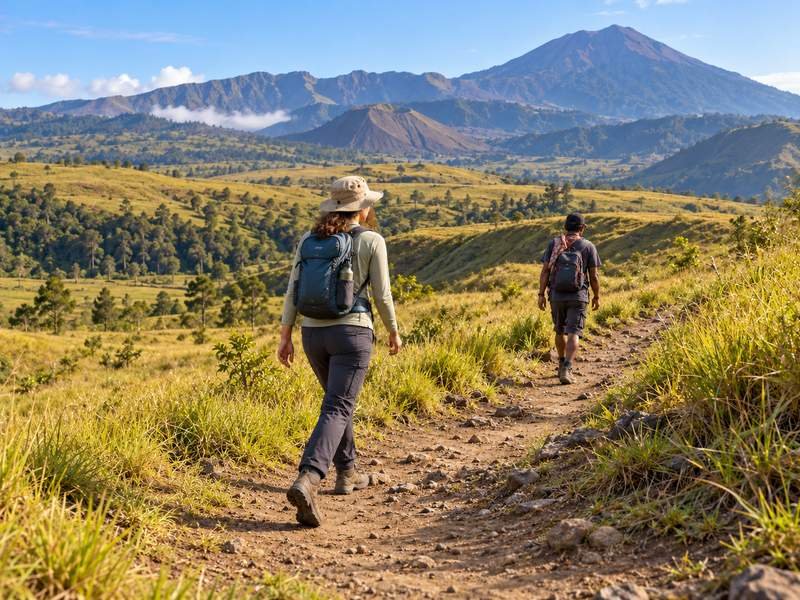
A bag you can live with for the day
There’s a simple test worth doing at home. Load the daypack as you intend to carry it, then go for a walk with some uphill effort. A quick lift beside the bed tells you very little. Think about carrying weight while researching Rinjani camping what to bring.
We’d discuss Rinjani camping distance and duration alongside luggage arrangements, because the time you spend carrying that bag changes how generous you can be with extras. Shoulders have opinions too.
Water comes first here. Bottle capacity and refill arrangements should be agreed with your guide for the itinerary, rather than borrowed from somebody else’s packing photograph.
Sun protection goes somewhere reachable. Digging through the bag for sunscreen gets tiresome, and a hat buried under your evening clothes isn’t doing much for you on an exposed stretch.
Then the light. A headlamp leaves your hands free, which we’d appreciate around camp even without a summit attempt. We’d test it before departure and have a suitable spare power option available.
For snacks, a few things you already enjoy eating on walks will do. Special dietary requirements belong in the earlier meal conversation with the team. Nobody wants dinner to become a guessing game.
Try the rain jacket over the warm clothes
This catches an easily missed problem. A jacket that fits over a thin shirt might pull tight across your shoulders once you’ve added insulation underneath, particularly when you reach forward with the backpack on.
Better discovered at home. We’d also keep rainwear accessible and protect the phone separately, since a convenient backpack pocket isn’t necessarily a waterproof one.
Waterproof trousers are something to discuss for your particular departure. We’d make that decision with the route and conditions in mind, not on the assumption that Lombok weather is always beach weather.
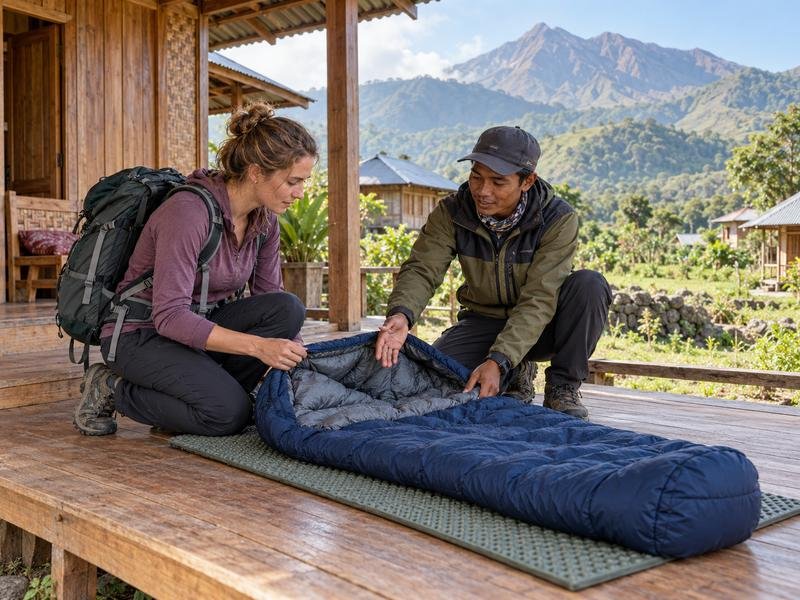
Do I bring my own sleeping bag?
Perhaps, but we wouldn’t buy one yet. Lombok Adventure Trip arranges camping gear for its trekking programs, and the useful question is what equipment will be supplied for your booking. What’s already included changes your Rinjani camping what to bring list.
Details beat assumptions. We’d go through the sleeping bag and mat with you, especially if you feel cold easily or have struggled to sleep on camping equipment before.
A liner might suit your personal preference. It doesn’t replace a sleeping bag appropriate for the conditions, so we’d settle the main setup first.
Will the porters take my personal luggage?
Not necessarily. Carrying the camp equipment doesn’t automatically mean carrying every guest’s bag, and we’d agree any personal carrying allowance before departure.
Extra support can be discussed. Arriving with an unexpectedly heavy load makes that conversation harder, especially when fair porter loads and working arrangements should already have been settled.
What about medication and toiletries?
Personal medication stays accessible and dry. Relevant health concerns should come up before booking too, because packing well can’t tell us whether a demanding route is suitable for you.
The whole bathroom cupboard? We’d leave most of it behind. Toilet paper is worth a little room, provided it stays dry, and we’d tuck in a sealable bag for used hygiene products. We’d want you to know what the toilet setup involves before you’re standing at camp wondering how it works.
We’d be disappointed to find someone else’s wipes beside the path on Rinjani mountain Lombok, and we wouldn’t leave ours there either. Used hygiene products come back out with us. Around a water source, we’d follow the guide’s directions even when washing something there looks convenient. And in the villages, we’d remember that our walking route passes through somebody else’s home.
Missing a jacket or another bit of kit?
We can look into rental gear with you. We’d want to know what’s missing before you arrive, though; hearing that a jacket is available isn’t much comfort if you can’t move your arms once it’s zipped up. We’d be reluctant to leave footwear to a last minute gamble. We can help narrow down your Rinjani camping what to bring choices.
You don’t have to guess whether the jacket in your cupboard will do. A photo sent to Wayan and the Lombok Adventure Trip team through the official website gives us something to discuss. Your dates help too, along with the route you’ve been looking at. And we’d like to hear which walks you’ve actually done lately, even if the answer is “not many”. That makes it easier to talk honestly about the difficulty, then work out pickup from where you’re staying. Permits and weather considerations can then be worked through before booking. You may need less new equipment than you think, or a different itinerary. Either is useful to know before leaving home.