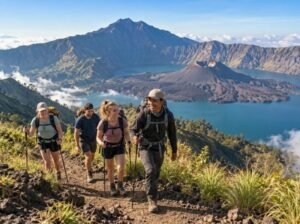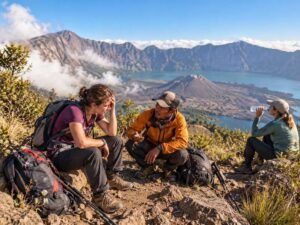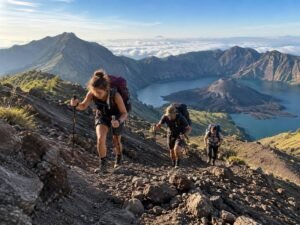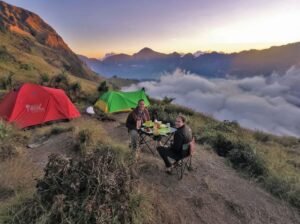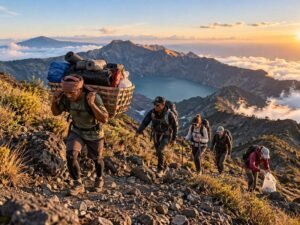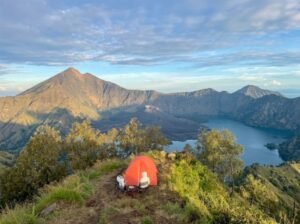
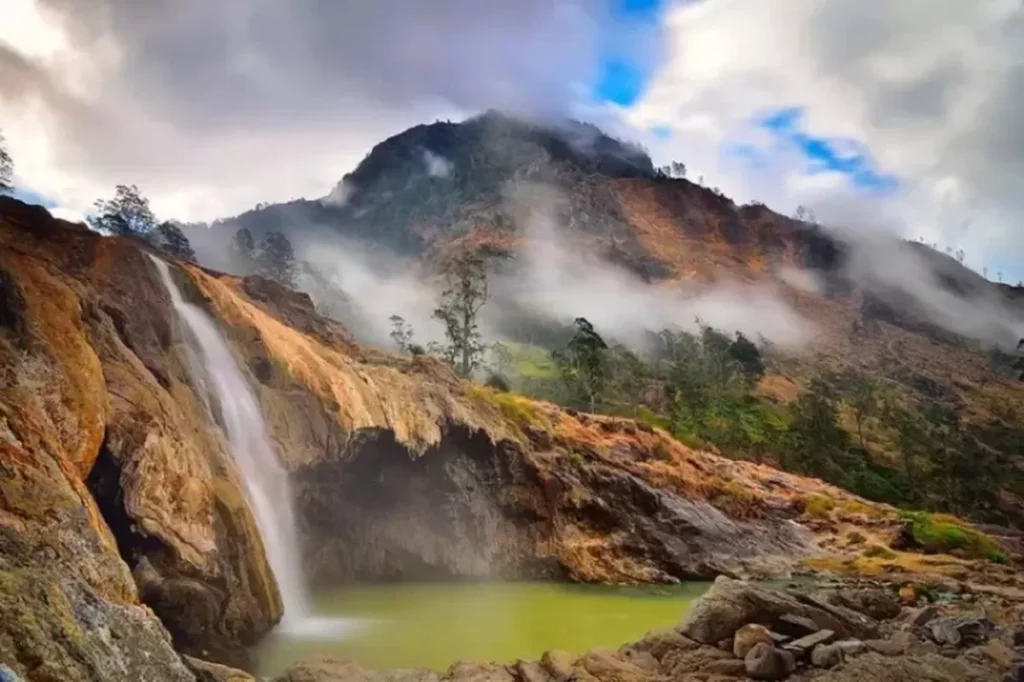
The first time I heard about Rinjani hot springs, honestly, I imagined something overrated. One of those places travel blogs keep repeating because everyone else already did. You know the type. Nice photos, average reality. But somewhere after a long hike near Mount Rinjani, with damp clothes and knees that felt slightly betrayed by gravity, I finally arrived there and… yeah, I was wrong.
The water was warm. Almost weirdly comforting.
Steam moved slowly through the trees while cold mountain air touched the back of my neck. Somebody nearby laughed loudly for no reason. Another hiker just sat still with eyes closed like he had discovered enlightenment in a small sulfur pool.
That moment stayed in my head longer than I expected.
And if you are planning a Lombok adventure trip, this place deserves more than a quick stop for photos.
The Walk Feels Like Part of the Story
Getting to Rinjani hot springs is not difficult exactly, but it is not effortless either. Which, strangely, makes it better.
You walk through forest paths that smell damp after rain. Sometimes the ground turns slippery. Sometimes dry leaves crack loudly under your shoes. Little details like that suddenly become memorable when you are away from cities for a while.
I remember stopping once just to listen.
No traffic. No ringtone. Just water somewhere below the trail and insects making sharp little sounds from the trees.
Maybe that sounds dramatic. But mountain silence really does something to your brain.
A local guide told me most people visit after Mount Rinjani trekking, especially hikers coming down with sore backs and exhausted legs. Makes sense. By the time you arrive, your body is basically negotiating for mercy.
Then you step into warm water.
Instant difference.
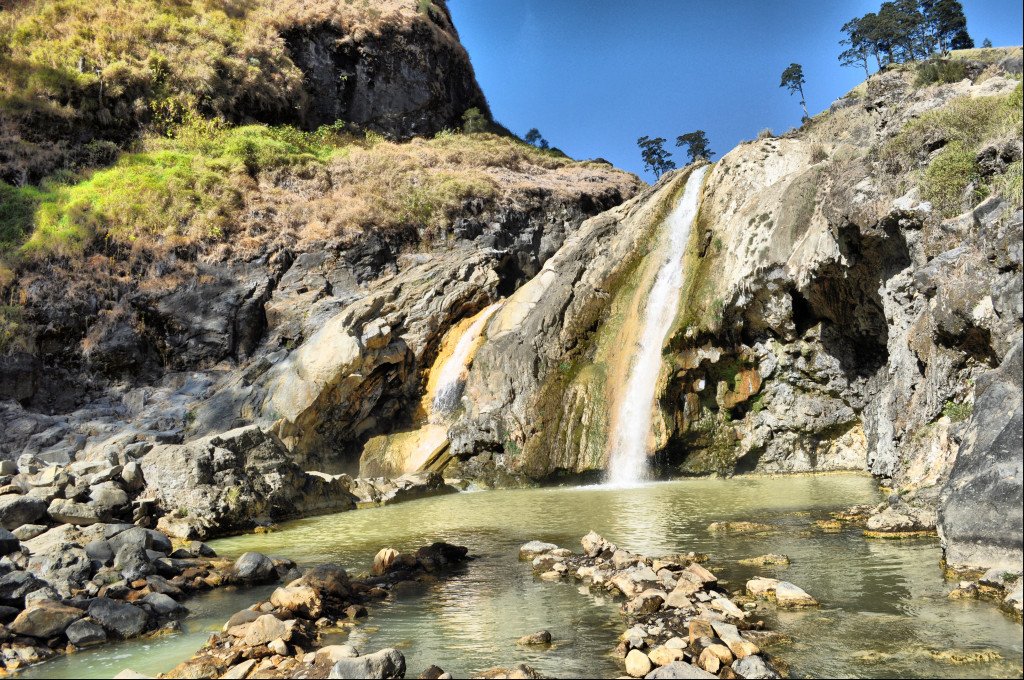
Not Fancy. That’s Why People Love It
Some travelers expect resorts. Tiles. Luxury changing rooms. Fancy cafés selling overpriced smoothies.
Rinjani hot springs is not like that.
And honestly? Good.
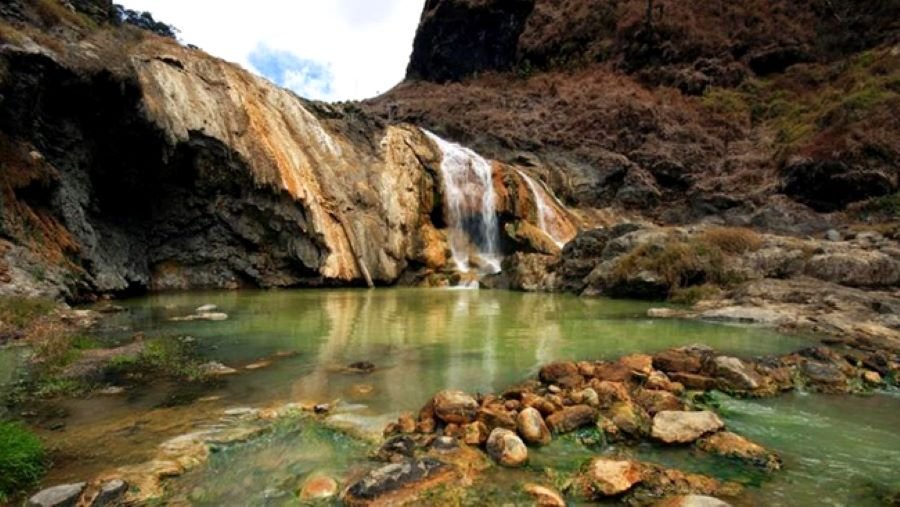
The pools feel natural and imperfect. Rocks are uneven. Water keeps flowing continuously from the mountain. Moss grows wherever it wants. Nothing feels too polished. There is this raw atmosphere that somehow makes everything feel more real.
At one point I noticed a hiker drying socks on a branch beside the pool. Another guy was eating instant noodles while half asleep.
Nobody cared.
That relaxed energy becomes part of the experience.
You stop trying to look impressive out there.
The Water Feels Different After Hiking
I think timing matters a lot.
If you visited Rinjani hot springs without hiking first, maybe you would simply think, “Nice place.” But after hours of climbing, sweating, and pretending your backpack is not painfully heavy, the warm water feels almost emotional.
That sounds excessive. I know.
Still true though.
Your muscles loosen slowly. The cold air mixes with steam rising from the pools. You sit there watching tiny ripples move across the surface while your heartbeat finally calms down.
A German traveler I met there said something funny. He looked at the water for a second and whispered, “This is better than the summit.”
He was joking. Probably.
But also maybe not.
The Forest Around the Springs
A lot of online photos only show the pools themselves, which is kind of unfair because the surrounding forest is half the magic.
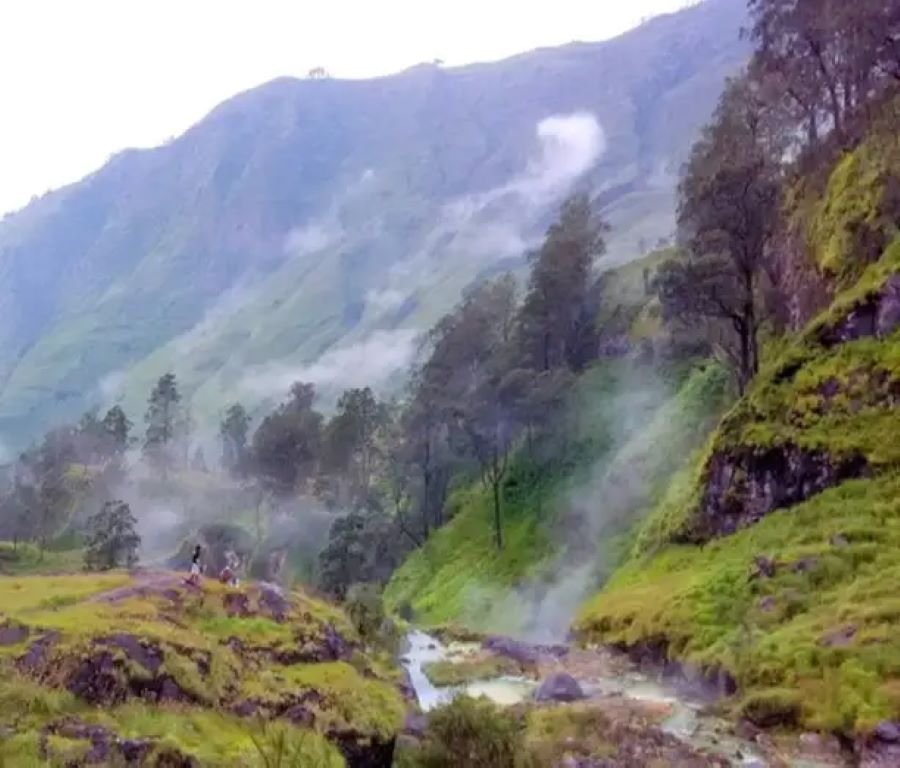
Around Rinjani hot springs, everything feels green in layers. Thick tropical plants. Dark wet stones. Ferns hanging near the pathways. Sometimes fog slips between trees so softly you barely notice it moving.
And the smell. Hard to explain.
Sulfur, yes. But also wet soil, wood, leaves, river water. It smells alive. Not clean in the artificial hotel sense. Just… alive.
There were moments when the entire place felt almost prehistoric.
Like the mountain existed perfectly fine without humans and we were only temporary visitors passing through.
Maybe that sounds too philosophical for a hot spring story. But mountains do that sometimes.
Best Time to Visit? Probably Dry Season
Most travelers prefer visiting Rinjani hot springs during the dry season between April and October. Trails are safer, visibility is clearer, and hiking conditions become more comfortable overall.
Rainy season changes everything quickly.
Mud appears out of nowhere. Rocks become slippery. Even simple paths suddenly demand concentration. I slipped once near a small bridge and nearly dropped my water bottle into the river below. Not my most heroic travel moment.
Still, rainy mornings can feel beautiful in their own strange way.
Fog everywhere. Quiet trails. Fewer people talking loudly.
The whole forest feels slower.
Tiny Things Nobody Mentions
Here is something funny.
Food tastes better near mountains. I do not know why. After soaking at Rinjani hot springs, even plain instant noodles somehow feel luxurious. Maybe your body is just exhausted enough to appreciate simple things again.
Coffee too.
Especially hot coffee in cold air.
I remember sitting beside the pools with wet hair and cheap local coffee while someone nearby played old Indonesian songs softly from their phone speaker. Tiny moment. Nothing extraordinary. Yet I still remember it clearly months later.
Travel memories work like that sometimes.
Not the expensive parts.
The random ones.
The Local People Add Warmth Too
One thing many articles skip completely is the atmosphere around Senaru village. And honestly, that feels like a mistake.
Before reaching Rinjani hot springs, you usually pass small family-owned stalls, local guides, sleepy cats near doorways, children running around after school. The interactions are simple but memorable.
Someone offers tea.
Someone asks where you came from.
Somebody laughs when your pronunciation sounds terrible.
It feels welcoming without trying too hard.
That matters.
Especially now when many tourist destinations feel overly commercial or staged for social media.
More Than Just Another Tourist Spot
I think people remember feelings more than locations. That is probably why Rinjani hot springs stays in travelers’ memories longer than expected.
The place creates contrast.
Cold air, warm water.
Exhaustion, relief.
Silence, distant conversations.
Your body feels tired while your mind suddenly feels lighter. Hard combination to describe properly unless you have experienced it yourself.
And if you are building a proper Lombok travel guide, skipping places like this would feel incomplete somehow. Lombok is not only beaches and sunsets. The mountain side of the island has a completely different personality.
Quieter.
Rougher.
More reflective maybe.
A Small Memory I Still Think About
This part sounds random, but whatever.
Near Rinjani hot springs, I once saw an older local man sitting quietly beside the water while heavy mist moved through the trees behind him. He was not swimming. Not talking. Just sitting there with sandals beside him.
Completely calm.
For some reason that image stuck in my head longer than all the scenic viewpoints during the trip.
Maybe because modern life rarely looks like that anymore.
Nobody rushing. Nobody scrolling. Just silence and mountain air.
Simple things suddenly feel important out there.
Final Thoughts From Someone Still Thinking About It
I did not expect Rinjani hot springs to become one of my favorite memories in Lombok. Honestly, I thought the beaches would dominate everything else. But the mountain experience stayed with me longer.
Maybe because it felt less curated.
Less performative.
More human.
If you are planning hiking routes, adding Rinjani hot springs after a difficult trekking day is absolutely worth it. Sit longer than you planned. Ignore your phone for a while. Let your legs recover slowly while steam rises around the forest.
That quiet feeling afterward is difficult to explain properly.
And weirdly enough, that is probably why people keep returning to Rinjani hot springs.