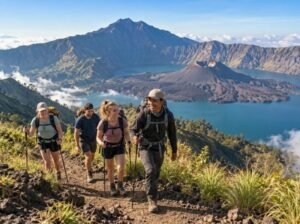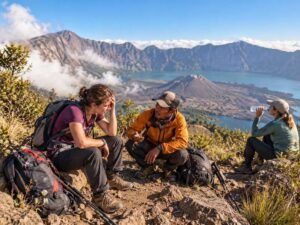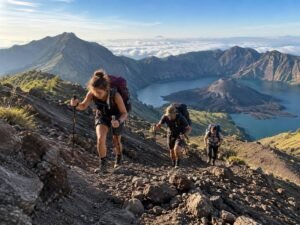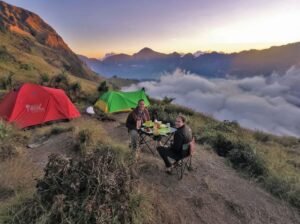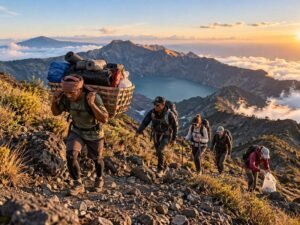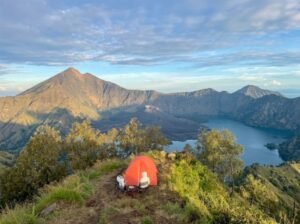
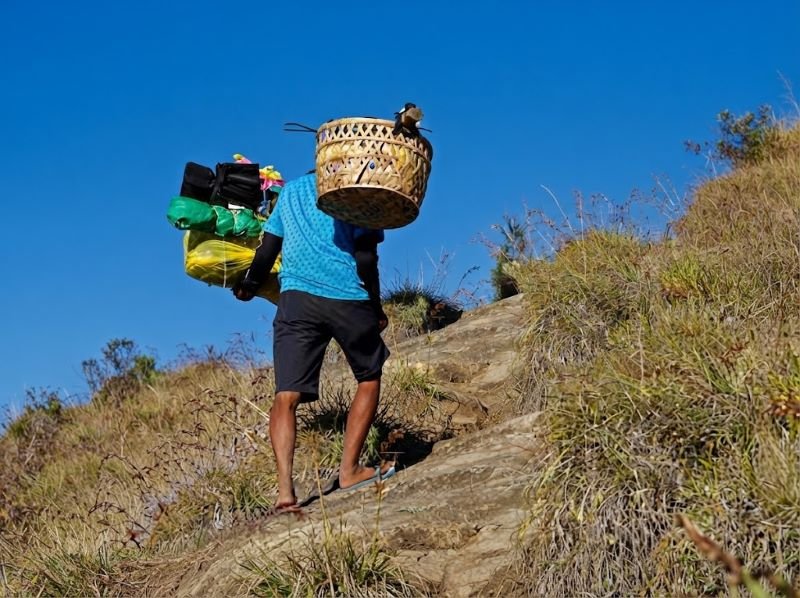
A porter can take weight out of the logistics. He cannot take the climb out of your legs. That is the simplest way to understand rinjani porter service fitness requirements before you book a trek.
After more than 15 years guiding in Lombok, I have seen very fit guests struggle because they started too fast. I have also walked with ordinary travelers who did well because they paced themselves. Rinjani is not a gym test. It is hours of uphill effort followed by tired legs on the way down.
So the useful question is not “Am I athletic?” Ask whether your body is used to walking for a long time on uneven ground. If the answer is no, that is not a reason to give up. It is a reason to train with a little more purpose before the trip.
Fitness Matters Even When a Porter Is Supporting You
On a supported Mount Rinjani trekking trip, the porter team helps with agreed camp equipment and supplies. Your own job is still physical. You walk the trail yourself, manage your breathing, and deal with the effort of climbing.
People sometimes hear “porter service” and imagine the hard part disappears. It does not. What changes is the amount of expedition gear you personally manage, not the mountain underneath your boots.
For most guests, steady endurance is more valuable than explosive fitness. A person who can walk hills for several hours without emptying the tank too early usually has a better base than someone who only trains in short bursts.
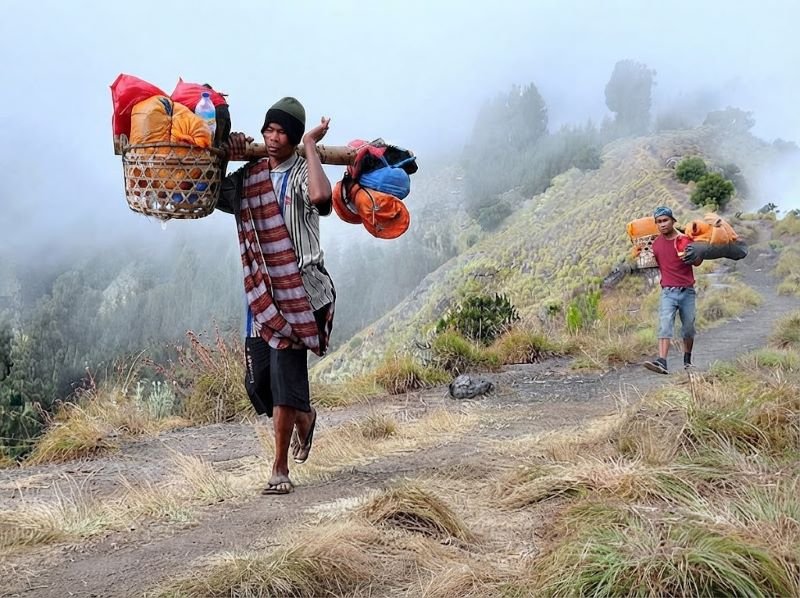
The Part Your Legs Notice on the Way Down
Climbing gets most of the attention. Descending can be the surprise.
Your thighs have to control your body on loose or steep ground when they are already tired. If your training only includes flat walking, that feeling may arrive quickly. This is one reason Rinjani porter service fitness requirements should include downhill preparation, not just climbing stamina. A few weeks of hill walking can make a real difference because your legs get used to both directions.
Altitude adds another variable, and fitness does not cancel it out. Someone who runs regularly may still feel the effects of elevation. Read the Rinjani porter service altitude guide separately because altitude awareness deserves more than a passing sentence in a fitness article.
A Rinjani Porter Service Training Plan Does Not Need to Be Fancy
The best rinjani porter service training plan is one you can actually keep doing. Walking is useful, but hills are better. If you live somewhere flat, stairs work.
I would rather see a guest build consistency than squeeze in one brutal session before flying to Lombok. Start with regular walks and let some run longer. Add climbing where your knees tolerate it. When we discuss Rinjani porter service fitness requirements with guests, that steady preparation usually tells us more than one unusually hard workout. On a few sessions, carry the daypack you expect to use.
Footwear deserves attention too. Wear your trekking shoes before departure, especially on longer walks. A pair that feels fine for twenty minutes can become a different story after several hours.
If you are still deciding what kind of Rinjani trip suits you, the broader guide to Rinjani Mountain Lombok gives useful context before you compare itineraries.
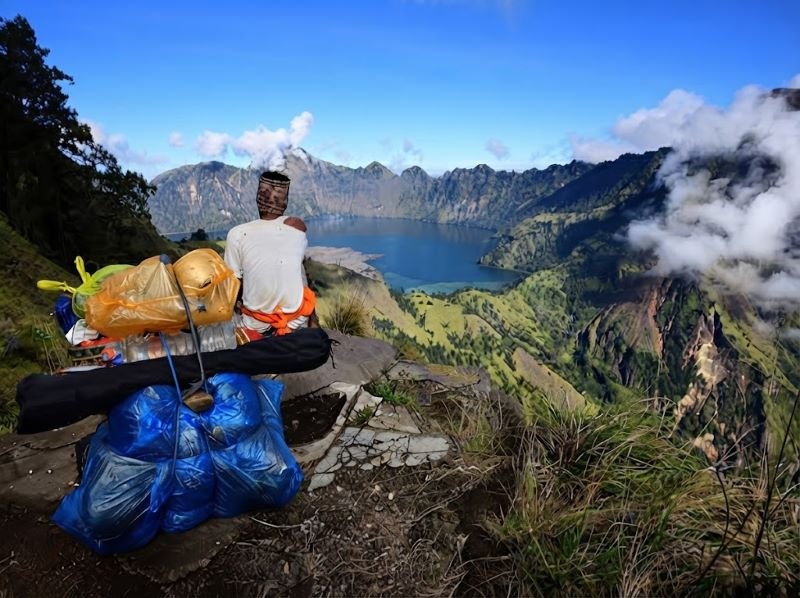
Rinjani Porter Service Fitness Requirements by Route
This is where Rinjani porter service difficulty gets misunderstood. A shorter itinerary may give you fewer days on the mountain, but it can also compress a lot of effort into a tighter schedule. Longer trips spread the experience out, yet your body has to wake up and do it again the next morning.
That tradeoff is why Rinjani porter service fitness requirements should be matched to the route rather than treated as one universal standard. Your hiking history matters. So does how well you recover after a demanding day.
A summit-focused Rinjani 2 days 1 night itinerary can feel intense because the schedule is concentrated. It may suit a traveler with a stronger fitness base, but the right choice depends on current conditions and the individual hiker.
Do not pick a route because the number of days fits your flight calendar. Talk through your recent activity honestly. That is more useful than simply saying you are “quite fit.”
Food Is Part of the Energy Equation
Rinjani porter service food and meals are part of trekking support with Lombok Adventure Trip, but food preferences should be discussed before departure. If you have an allergy, tell the team early. The same goes for dietary restrictions.
Eating enough can be harder than it sounds when you are tired. You do not need to turn meals into a nutrition project. Drink regularly and pay attention to how your body feels.
For a longer route, such as Rinjani trekking Torean route, recovery between days becomes part of the challenge. That makes sleep and sensible pacing just as relevant as how strong you felt on day one.
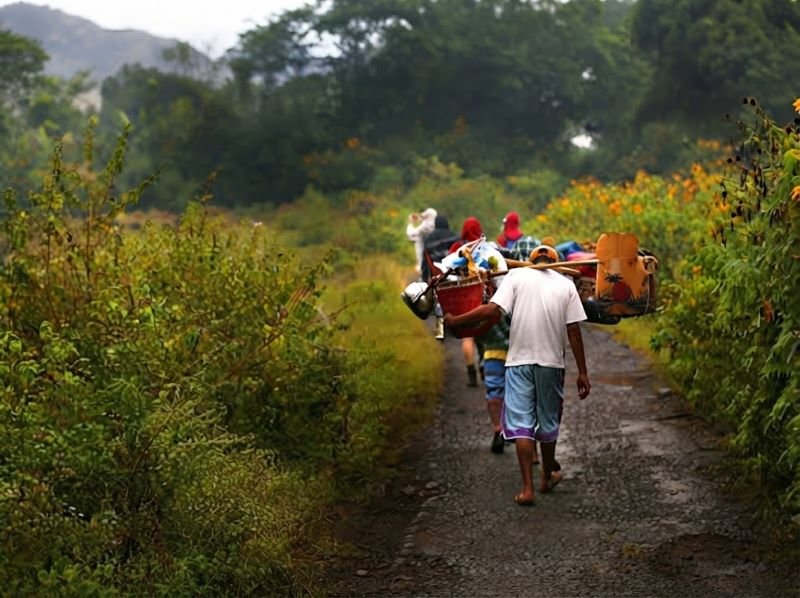
A Few Safety Habits Matter More Than Showing Off Fitness
One of the better Rinjani porter service safety tips is also the least dramatic: tell your guide when something feels wrong. Hiding pain or unusual fatigue does not make the group stronger. It gives the team less information to work with.
Weather can change the plan, and trail conditions may do the same. Park rules or permits can affect what is possible on a given trip. That is why Rinjani porter service fitness requirements should never be treated as a promise that someone will reach the summit. No responsible operator should guarantee a summit outcome before those variables are known.
Responsible trekking also includes how the porter team is treated. Follow the packing guidance instead of bringing unnecessary weight. Keep your rubbish controlled and respect local customs.
Questions Worth Answering Before You Commit
How do I know if my fitness is good enough?
Try a long hilly walk and pay attention to the next day, not just the finish. If you can move steadily and recover without feeling completely wrecked, you have a useful baseline. It is not a guarantee for Rinjani, but it tells you more than a fast treadmill session.
Should I train with a backpack?
Yes, with a small one. Use the kind of load you expect to carry yourself. There is no benefit in copying a porter load during training.
What if I am fit but have never trekked at altitude?
Say that clearly when discussing the itinerary. Strong lowland fitness is useful, yet altitude tolerance is a separate issue. Pacing may need to change once elevation begins to affect you.
Can a porter make the trek easy?
No. Porter support can reduce the logistics you carry, which is valuable, but you still need to climb and descend under your own power.
Prepare for the Version of Rinjani You Will Actually Meet
There is no perfect fitness score for this mountain. What matters is whether you have prepared for sustained walking and whether you are honest about your current condition. That is a more useful reading of rinjani porter service fitness requirements than trying to compare yourself with strangers online.
If you want help matching your fitness to a realistic itinerary, message Lombok Adventure Trip through the official website. Ask Wayan and the team about route difficulty or current availability. You can also discuss pickup arrangements, permits, and weather considerations before booking. The aim is not to force the hardest plan. It is to choose a trek that fits the way you actually travel.