
We’d put good footing ahead of a better lens on this trip. That’s where our tetebatu waterfall photography guide begins, because a beautiful frame loses its appeal when you’re trying to balance an expensive camera above wet rocks.
The useful starting point is simple. Choose a stable place to stand, protect the bright water from overexposure, and leave enough time to put the camera away between walking sections. You can come home with worthwhile photographs using a phone.
No heavy camera bag required.
A practical Tetebatu waterfall photography guide starts with the location
Before talking about settings, we’d settle which waterfall you’re visiting. Tetebatu outings can involve different stops, and a photograph labelled “Tetebatu waterfall” doesn’t tell you exactly what the approach will involve.
Sarang Walet is one named option in the area, with a shaded passage that gives photographs a different feel from an open cascade. We’d discuss the actual access with your local guide before deciding whether your equipment suits the walk.
For context, we’d consider a Lombok waterfall tour around Sendang Gile and Tiu Kelep as a separate northern outing. Trying to collect distant waterfalls in one day leaves precious little room to photograph any of them properly.
Bright water can fool your camera
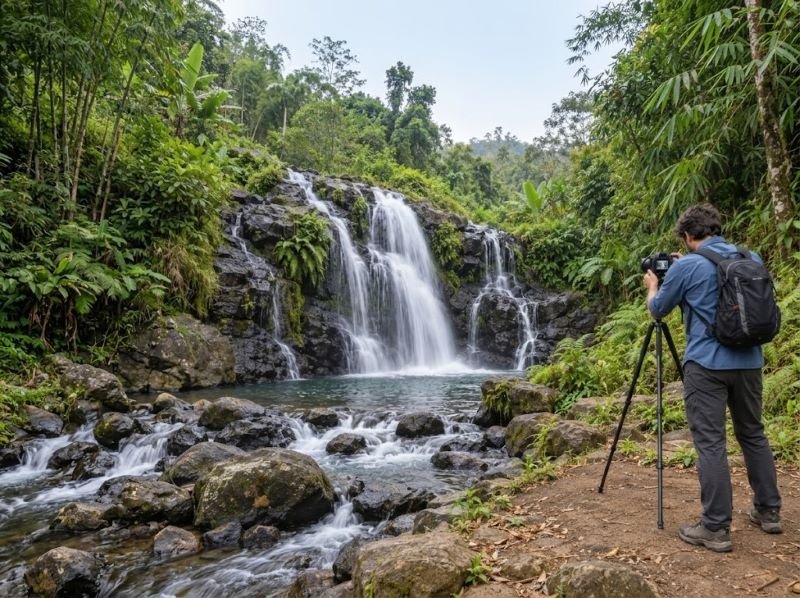
We like soft light for waterfalls. Strong sun reaching part of a shaded scene can leave you choosing between white water with no detail and rock faces that look almost black.
On a phone, tapping the bright water and reducing exposure slightly is a useful starting point. We’d take a test photograph, then enlarge it to see whether the white areas still have texture. The screen’s overall brightness can be misleading.
With a camera, we’d use the histogram or highlight warning if available. A modest exposure adjustment is easier to live with than discovering back at the hotel that the waterfall has become a blank white stripe.
As for the best hour? We’d leave that open until the exact stop and forecast are clear, because a shaded passage doesn’t follow the same lighting pattern as the rice fields outside.
One suggestion in this Tetebatu waterfall photography guide is to photograph the same frame at two exposure levels. We’d keep both until you can compare the detail on a larger screen.
Silky water is optional
There’s nothing wrong with visible droplets. We actually like them when the photograph includes someone enjoying the view, because a very slow shutter can turn a small movement into a blurred face.
For flowing texture, around 1/10 to 1/2 second gives you somewhere to begin experimenting. Those aren’t magic settings. Faster water and your chosen framing will change the result, so we’d compare a few exposures before committing.
A tripod helps only where there’s stable ground and room for others to pass. We’d skip it on a narrow walking section, even if that means keeping the shutter speed faster.
If you’re weighing up another photography day, we’d compare the Aik Berik waterfall photography guide before choosing your route. Different surroundings can make a bigger difference to your photographs than buying another filter.
The photograph between the photographs
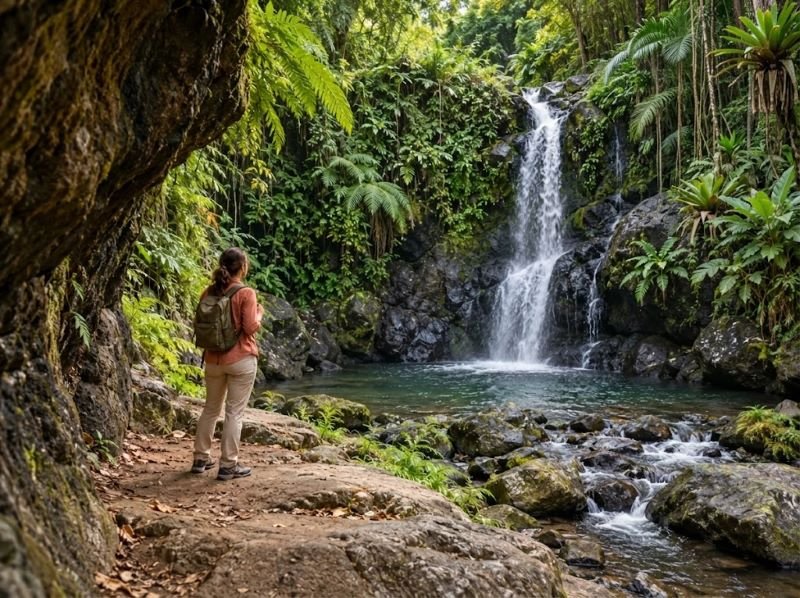
Our favourite approach is to include something that explains the place. A person standing on suitable ground can show scale; a curve in the rock can lead the eye towards falling water.
One careful frame beats twenty hurried ones.
We’d avoid directing your partner backwards while watching through a screen. It’s too easy for the photographer to notice the composition and miss the awkward footing just outside it.
Mist creates a less dramatic problem. A few droplets on the lens can soften every photograph, so we’d keep a clean cloth somewhere accessible and review an image whenever the camera has caught spray.
A lighter bag makes the walk easier
If your search has reached “tetebatu waterfall what to bring”, we’d start with protection for what you already own. A dry bag is useful between shooting stops, though opening it beside spray rather defeats the point.
Our packing advice for this Tetebatu waterfall photography guide is deliberately modest. We’d prefer a camera you can put away quickly over a bag that makes every wet step awkward.
We’d carry one versatile lens and leave unnecessary equipment behind. A second cloth stored separately is handy when the first one gets wet, while drinking water deserves space before another camera accessory.
Footwear with grip would come before any camera upgrade on our packing list. For anyone looking for a tetebatu waterfall trail guide, the more useful conversation is about slippery surfaces and current access, not simply how many minutes the walk takes.
When comparing areas, we’d use the broader waterfall Lombok options to match the day to your pickup point and walking confidence. A shorter itinerary can leave more energy for photography.
Leave room for the countryside
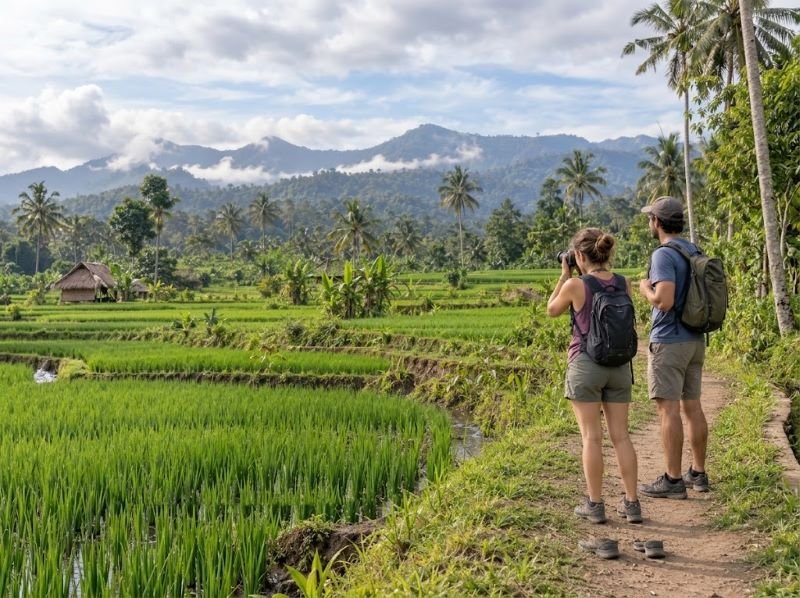
We wouldn’t fill every spare minute with another waterfall. Among tetebatu waterfall nearby attractions, the rice fields offer a welcome change of subject, especially after working with dark rock and moving water.
We’d leave a little space in your Tetebatu waterfall photography guide itinerary for whatever catches your eye along the agreed path. A quiet rice field photograph might end up being your favourite.
A quieter frame can be refreshing.
We’d stay on agreed paths through cultivated land and seek permission before photographing people closely. Someone working in a field isn’t automatically part of your photo session, however lovely the background looks.
We also favour clear agreements about local guide fees and walking time. Fair pay belongs in the plan, along with carrying your rubbish out and leaving rocks and vegetation undisturbed.
Can I take good photographs with a phone?
Yes. We’d use the main camera first, since digital zoom can lose detail quickly in shade, and concentrate on a clean lens and steady hands before experimenting with special modes.
Can I swim during the visit?
Possibly. No tetebatu waterfall swimming guide can establish whether a particular pool is suitable on your travel date, so we’d follow the local guide’s assessment and accept that swimming may be ruled out.
Is the walk suitable for children?
Sometimes. We’d discuss the actual route and your children’s walking confidence before suggesting it, because a short approach can still involve surfaces that are awkward for small feet.
What happens if rain changes the plan?
We’d adjust. Photography doesn’t justify entering an unsuitable passage or continuing towards rising water, and we’d rather discuss another stop than force the original route to fit the booking.
Let’s plan around the photographs you want
If this tetebatu waterfall photography guide matches your kind of day, message Lombok Adventure Trip through the official website with your pickup location and travel date. Tell Wayan and the team whether you’re bringing a phone or a camera, and we can discuss a realistic pace.
Before booking, ask about current access and walking difficulty. We can also clarify availability, any applicable permits and weather alternatives, so there’s room for the photographs without rushing the walk.